A Strategy Worth Scaling
Rios of Mercedes: 170 Years of American Heritage
In Texas’s Rio Grande Valley, Rios of Mercedes has been making legendary cowboy boots by hand for more than 170 years - all without ever selling a single pair directly to a consumer online. You have an opportunity to make more money, to take more control, and to capture a closer relationship with the customer. And you decide not to take it. Rios has been making that decision for decades.
The company traces its roots back to 1853, building an unshakeable reputation around craftsmanship, quality, and deep-seated relationships with independent Western retailers. Today, the brand remains distributed exclusively through a network of carefully selected storefronts across the country. Rios of Mercedes does not sell its boots directly at scale. Not online. Not through its own flagship stores.
Not because it hasn’t considered it. And not because the economics don’t make sense.
Quite the opposite.
A $300 wholesale boot becomes a $600 retail boot. Put that same boot on your own website and the entire $600 relationship belongs to you. Ryan Vaughan, CEO and President of the Rios Family of Brands, knows this. He also knows exactly why Rios chooses the $300 side of the equation.
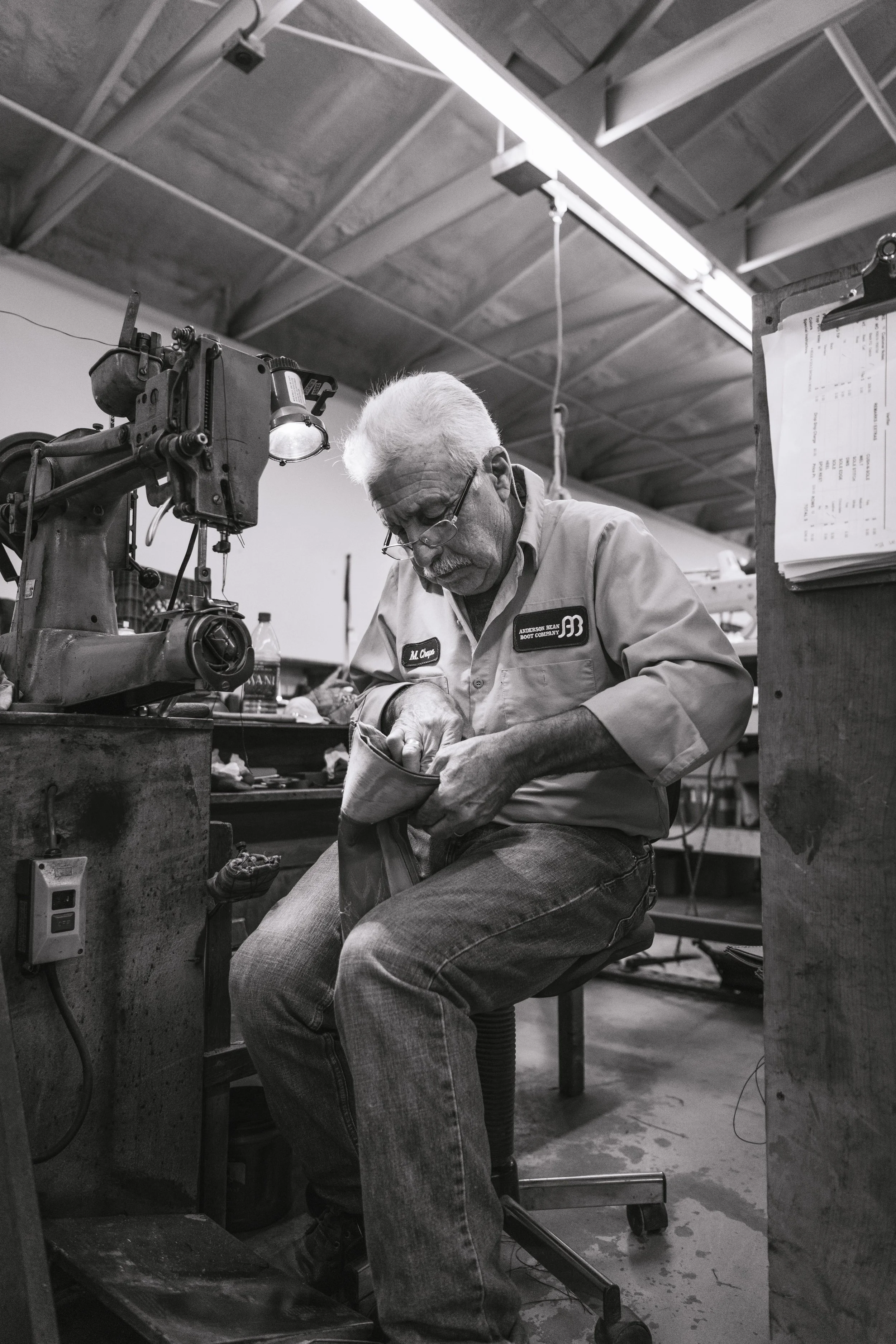
Each boot is still made by hand. At Rios, every single step is guided by human hands, keeping a 170-year-old operational heritage alive.
“We’re experts in making boots, not selling them. That’s why we don’t compete with our retailers by selling direct. Never have, never will.”
Rios of Mercedes has made that choice for generations. The decision is far more than a distribution strategy.
It is a defining choice about what kind of business Rios wants to be - and how much room it is willing to leave for others.When Ryan Vaughan married into the family and joined Rios in the late 1990s, the company had already spent decades building its business around its retailers. Vaughan’s father-in-law Trainor Evans understood the value of those relationships when he acquired Rios in the 1970s.
“A great bootmaker could make very little happen without good retail partners.”
What is striking is not that this principle began then. It is that Rios has continued to make the same choice as the world around it changed - as direct-to-consumer became the new standard, e-commerce transformed retail and the digital goldrush of "owning the customer relationship" became the central ambition of modern business boardrooms.
Rios could have changed its mind.
It hasn’t.
Because the retailer is not simply where boots change hands.
The retailer fits the customer.
The retailer advertises locally.
The retailer employs people.
“The way I was raised in this industry is to have real strong relationships with our retail partners. We need them to be the ones supporting the FFA, the 4-H groups, the local high school football team, the local churches, and the neighborhood restaurants. If we can get them good quality products, they can support the community they are part of.”
That changes the calculation.
Rios could capture more of the transaction. Instead, it gives something up in order to keep the ecosystem intact.
“Partnerships flow more effectively when we all stay in our lanes.”
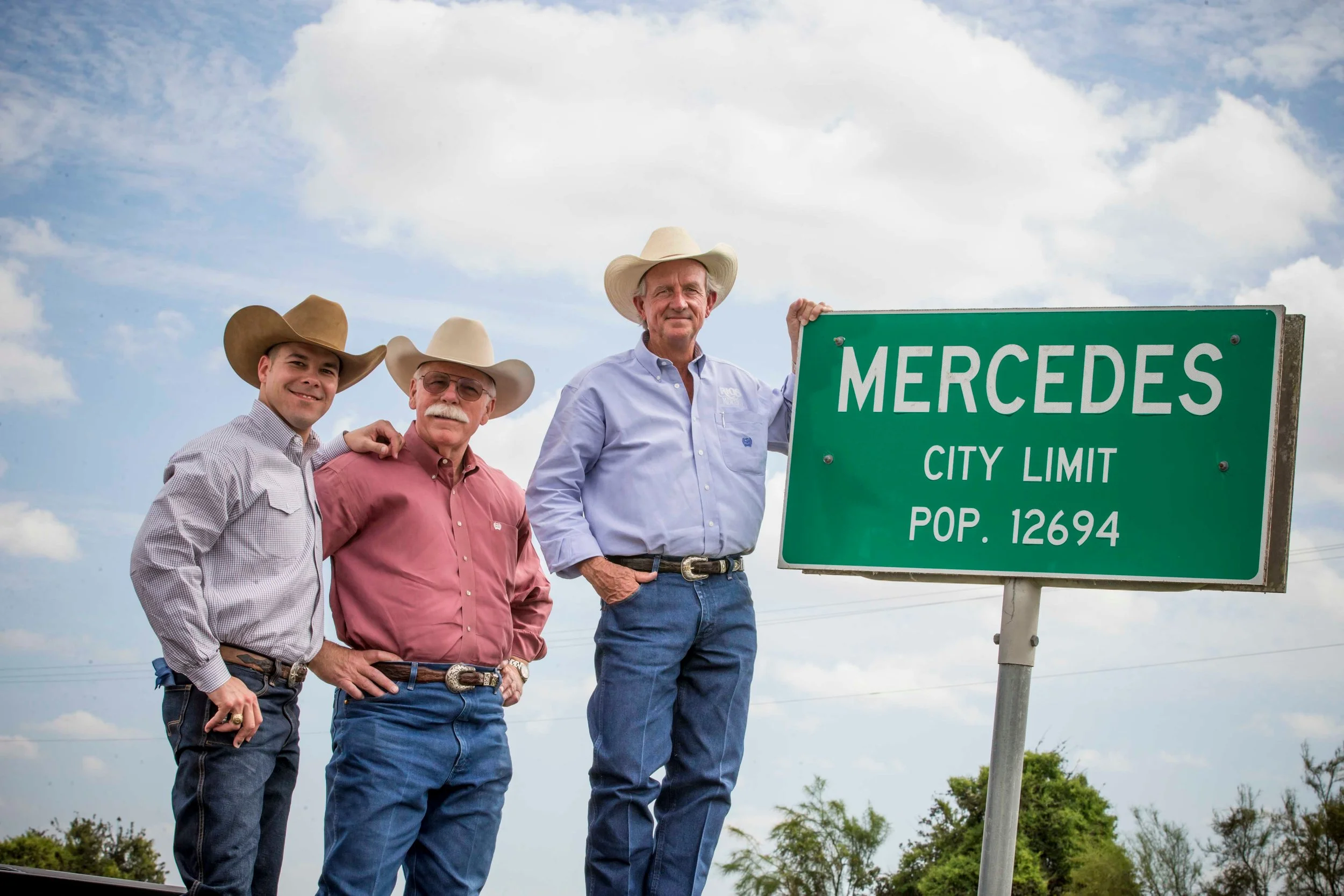
The custody of the craft. From left to right: Ryan Vaughan, CEO and President of the Rios Family of Brands, and longtime owners Pat Moody and Trainor Evans - choosing to stay in their lane, intentionally steering and protecting the brand’s heritage.
For Rios, their lane is making boots. There is a certain confidence in that. And perhaps that is what makes the decision more interesting than a simple argument about wholesale vs. direct-to-consumer.
Rios has not chosen dependence because it lacks ambition. It has chosen a particular kind of interdependence because it knows what it is exceptionally good at. Making boots.
The choice creates constraints.
Rios gives up margin. It gives up some control over how the product is presented.
It doesn't own the final customer relationship.
It has to trust other businesses to represent the brand well.
Those are real consequences.
But the decision creates something, too.
It leaves room for other businesses to exist.
A retailer can own its customer relationship, its reputation and its place in its community.
Rios can concentrate on making exceptional boots.
Neither business has to become the other.
A strategy like that becomes extremely powerful when it can survive temptation.
When push came to shove and COVID hit, competitors overseas struggled to keep factories operating. Retailers struggled with inventory. The easy response might have been to focus inward, protect margins and look for whatever opportunities the moment presented.
Rios did something else.
It doubled down on its retailers.
The company set out to tell their stories. It supported them when their brick and mortar businesses were under pressure. And, according to Ryan, the relationships that came out the other side were stronger for it.
"Whenever you start getting greedy and start thinking all of a sudden the dollar is more important than the partnership, I think that is when things get out of wack. I don´t know any other way, that´s the way I was raised in this industry and that´s the way we're going tocontinue to keep doing it. That´s the right way.”
As our world moves increasingly faster, one premise has become very fashionable: if you can own more of the value chain, you should.
If you can sell direct, sell direct.
If you can own the customer relationship, own it.If you can remove the middleman, remove the middleman.
If you can add another product, another channel, another revenue stream, another market, another capability - why wouldn’t you?
The logic is compelling.
And sometimes it is exactly right.
But Rios offers another possibility.
A business does not have to capture everything it possibly can in order to become stronger.
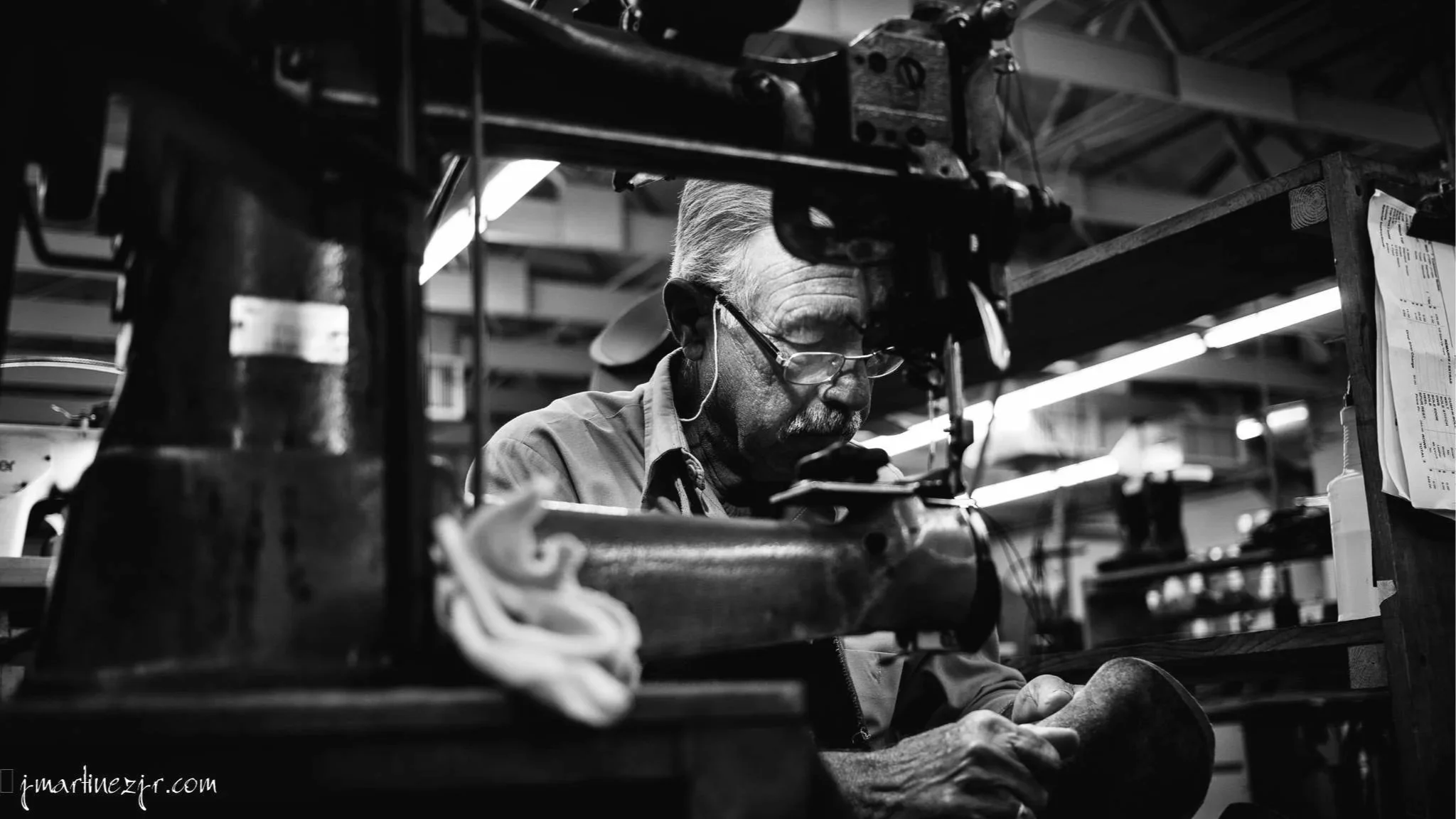
Quality over quantity. Inside the Mercedes, Texas workshop, production is strictly capped at fewer than fifty pairs of boots a day - ensuring uncompromised focus on the physical custody of the craft.
Sometimes refusing an opportunity is precisely what allows it to become exceptional. So exceptional that, in Rios’ case, staying in its lane led to being recognized by Ralph Lauren. For many years, the western boots for Double RL (RRL) - Ralph Lauren’s high-end, vintage-inspired Americana line - have been made by hand in Mercedes, Texas. It is a striking contrast: one of the largest fashion brands on earth relying on a workshop that caps production at less than fifty pairs of boots a day, not cutting any corners.
By refusing to chase every transaction, Rios of Mercedes became something much rarer: an irreplaceable anchor for its partners.
For Rios, holding the line through changes in retail, technology, consumer behaviour and generations of leadership is paying off.
Ryan is remarkably clear about what that means looking forward. He doesn’t describe a business that needs to become something larger simply because it can. Instead, he says “We’re in this for the long haul” - and talks about still doing things the same way thirty years from now, and about hoping his children might want to continue the work.
That changes the perspective.
Because a business built for the long haul makes different calculations.
It can choose relationships over transactions.
It can choose distinction over expansion.
It can choose to become exceptionally good at one thing rather than endlessly adding another.
And that is where Rios becomes interesting beyond boots.For a company carrying more than 170 years of history, Rios could easily have decided that survival meant capturing more. Instead, they keep choosing to excel at their values and their craft.
A business becomes the ultimate expression of what we choose to keep in the world. By refusing to capture the whole transaction, Rios protects what matters most.
And that is a strategy worth scaling.
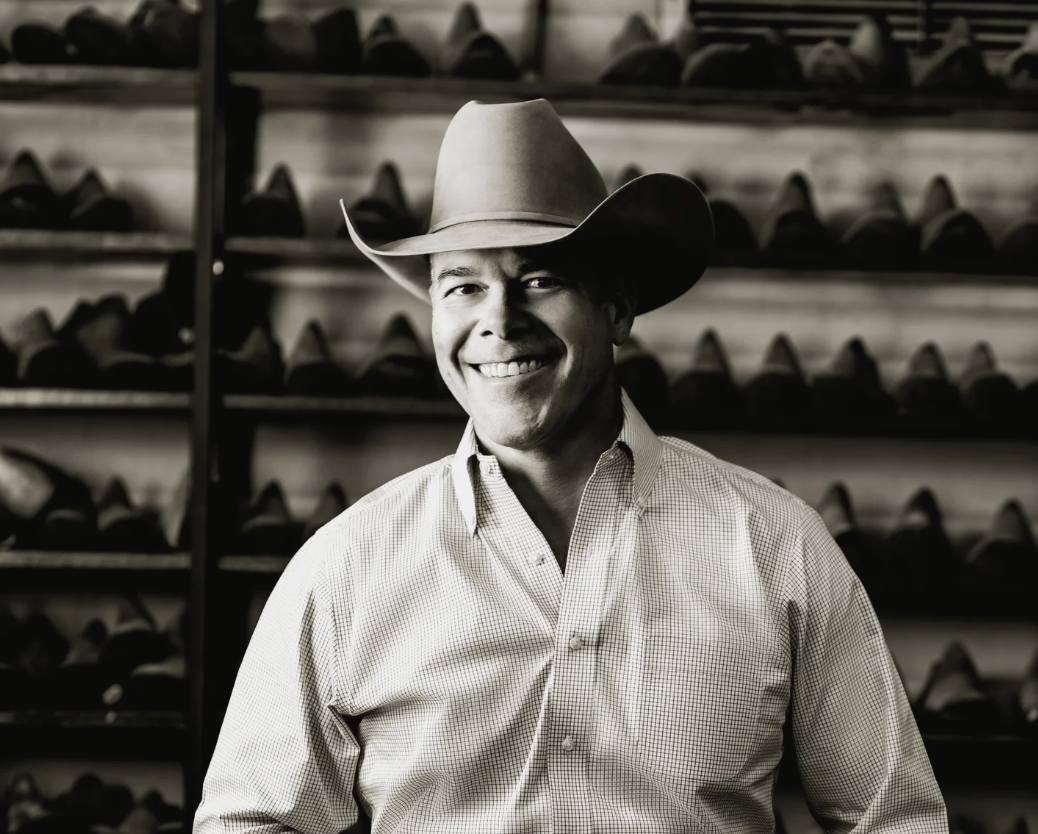
A conversation with Ryan Vaughan, President & CEO of the Rios of Mercedes Family of Brands, about protecting heritage, choosing the long game, and why some things are worth keeping exactly the way they have always been.